

 © Jackiemora01 on Wikipedia
Black Marlin, Striped Marlin and Blue Marlin
Best time for blue marlin: February to April
Best time for black and striped marlin: July to October
Billfish anglers will not be disappointed in Fiji, with the prize of striped marlin, black marlin and blue marlin waiting to be caught. Although all three of these marlin species are caught in Fiji waters, the blue marlin is the most common. Blue marlin can be caught all year round, but the best months to try your luck are February through to April, which sees the largest fish during the yellowfin tuna run. Blue marlin can range in size from 65 kg (143 lbs) to 450 kg (992 lbs).
If you want to catch yourself a black or striped marlin, though, you’ll have to wait until July – October.
Note that billfish are for “catch and release” only in order to boost the conservation efforts of these important fish species. Fishing charters will usually operate with a “Tag and Release” policy working with The Billfish Foundation.
 © FijiPocketGuide.com
Wahoo
Best time: June to September
For a real challenge catching one of the fastest fish in Fiji’s waters, try fishing for wahoo! One of the fastest fish in the ocean, wahoo provide an exciting challenge for anglers.
Nothing matches the excitement of seeing packs of wahoo literally flying through the air to attack your lure. Packs will have wahoo in a range of sizes, usually around 23 kg (51 lbs) but can reach as heavy as 45 kg (99 lbs)!
While many fishing charter operators will use heavy tackle gear for these fellows, some would say you will have the most fun with light tackle gear.
 © FijiPocketGuide.com
Yellowfin Tuna
Best time: November to March
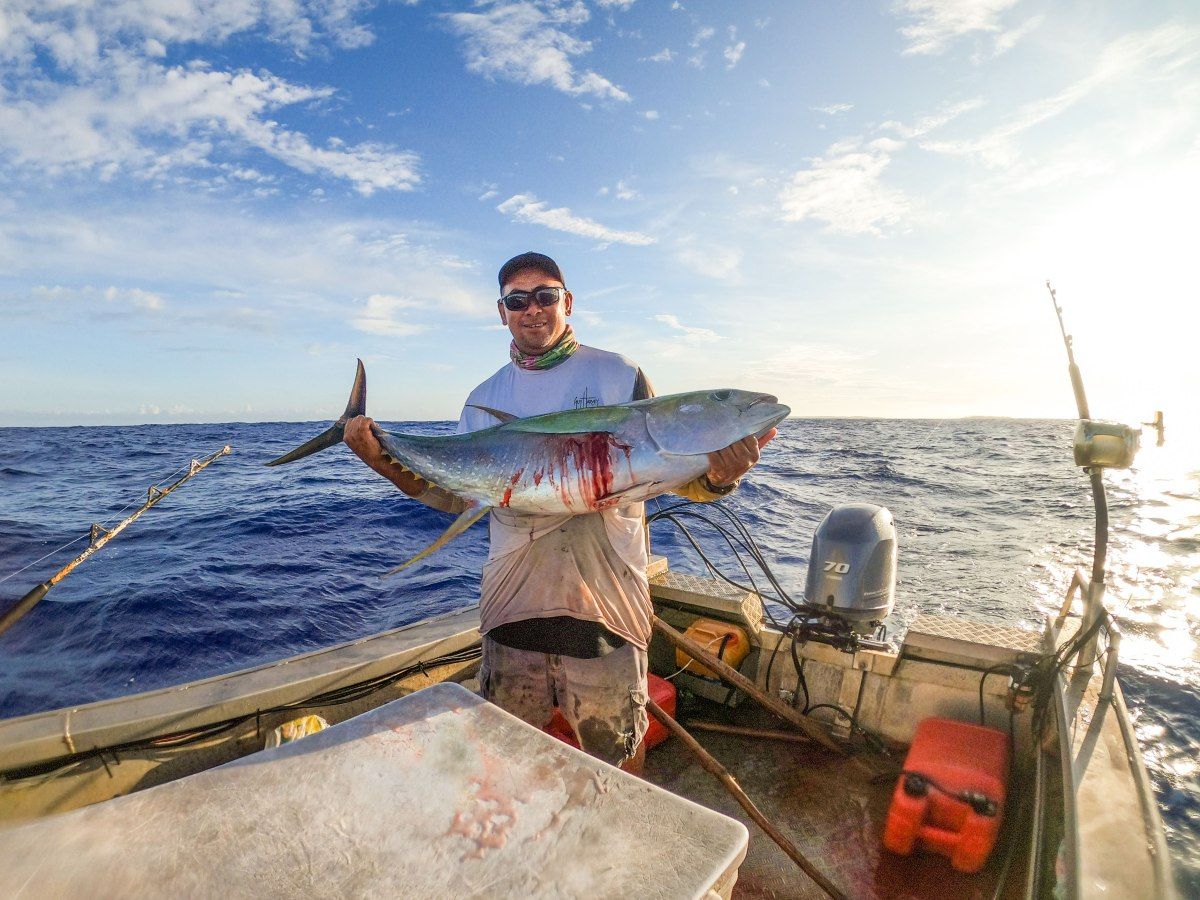
If you have heard anything about fishing in Fiji, then no doubt you will have heard of the yellowfin tuna run!
Yellowfin tuna migrate through Fiji’s waters twice a year, but the best time for fishing them is between February and August (however, it is possible to catch them year-round).
The great thing about fishing yellowfins is that they’ll always put up a fight, making you work harder than with most other fish.
Expect sizes to be between 7 kg (15 lbs) and 23 kg (50 lbs) (however, you always have the chance to catch a whopper of up to 82 kg (180 lbs)).
 © Pixabay
Mahimahi
Best time: October to January
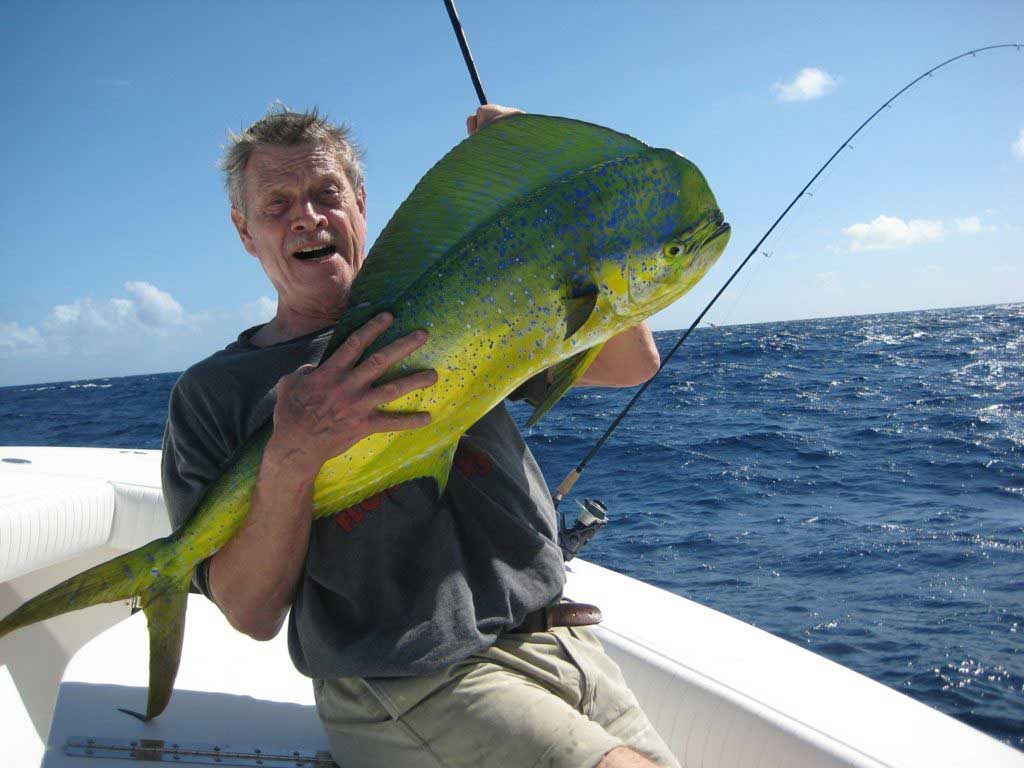
Fishing for mahimahi can be one of the most rewarding fish to fish for in Fiji.
Often found just a couple of kilometres off island shores, you’ll often get stellar island views as you relax with your fishing rod. Once the action begins, you’ll have fun using a light tackle, but a heavy tackle will do too. Be wowed by the mahimahi’s extraordinary colours as it comes to the surface and wowed further as you take one back to shore to eat.
Mahimahi, also known as dorado or dolphinfish, can weigh anything between 5 kg (11 lbs) to 25 kg (55 lbs).
 © oso243 on Flickr
Pacific Sailfish
Best time: June to September
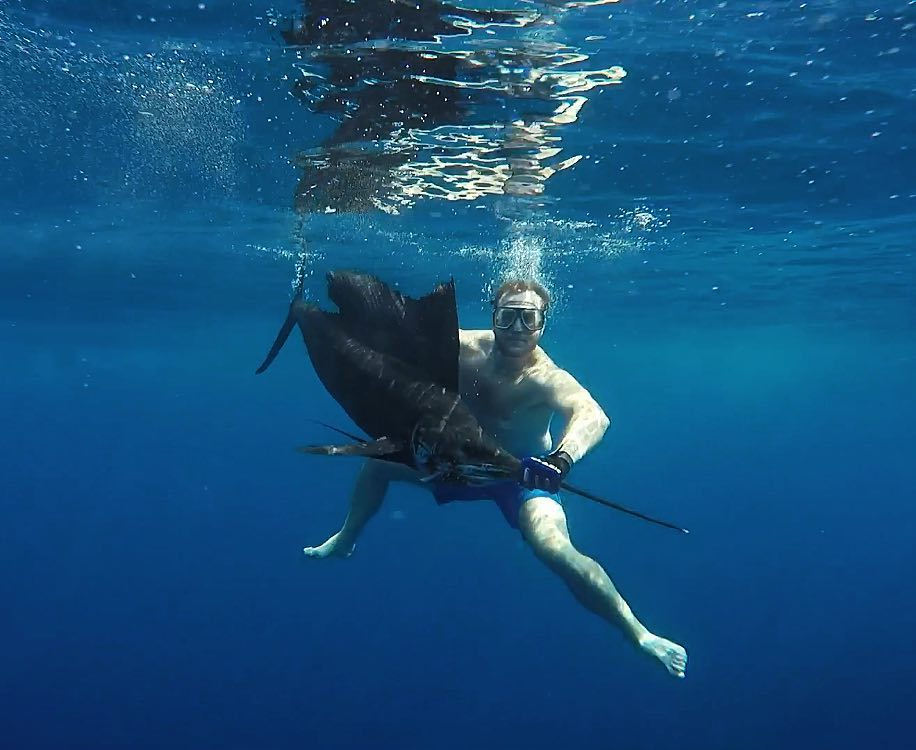
The dynamic and explosive demeanour of the Pacific sailfish makes fishing them a trip to remember.
Often found by reading the waters, following the birds, trolling for other fish species like wahoo and sticking to islands’ outer slopes and barrier reefs.
Although it’s possible to catch sailfish year-round in Fiji, your best bet is to try between June and September.
Pacific sailfish are known for their long dorsal fin that mimics a sail, as well as their long bill. Like other billfish in Fiji, resort and fishing charter operators will only catch these fish on a “catch and release” or “tag and release” policy.
 © FijiPocketGuide.com
Giant Trevally
Best time: January to April
Looking for a tough fight? Then head out for giant trevally, known for being some of the toughest fighting fish.
Fiji’s reef systems are full of giant trevally, ranging in size from 5 kg (11 lb) to 50 kg (110 lb)!
Giant trevally will go for surface lures, so the best method is to cast a popper above the reefs and wind back in. It’s best if your popper skips along the surface. The giant trevally will smash down the popper and try to take it back to the reef, then the fight is on. If you survive the first minute, then you might be able to make it work!
The best time to catch giant trevally is between October and March. Learn more about the seasons in What is the Best Time of Year for Fishing in Fiji.
 © Tchami on Wikipedia
 Dogtooth Tuna
Best time: October to March
You’ll be lucky to catch one of these guys, but when you do, it will feel like the ultimate reward.
Dogfish tuna, which is not tuna but a member of the bonito family, is often the surprise at the end of the line when fishing for other species, like popping for giant trevally, trolling or live baiting for marlin.
Dogtooth tuna are named after their large, widely-spaced teeth, which are great to see. There are some monsters out there, so try your luck.
The average size of a dogtooth tuna in Fiji is from 15 to 20 kg (33 to 44 lbs), but monsters up to 80 kg (176 lbs) have been caught.
 © FijiPocketGuide.com
Best of the Rest
Fishing in Fiji isn’t just about catching the whoppers in game fishing. A great day can be had on the boat out on the reef, catching smaller fish species, which is also a great activity for kids. These fish species are also good for spearfishing, which you can find out more about in our Guide to Spearfishing in Fiji.
The smaller fish species you can catch include (but are definitely not limited to):
- cod
- snapper
- emperor
- sweet lip
- coral trout
- parrotfish
- leather jacket
Remember that there is a minimum catch size limit for some of these fish species, so always check with your skipper or see the minimum catch sizes below.
Minimum Size Limits for Fish
To protect fish stocks and ensure sustainable fishing, the Fijian government has implemented minimum catch size limits for certain fish species. These are the current catch size limits:
- Barracuda – 300 mm
- Trevally – 300 mm
- Grey mullet – 200 mm
- Glassperch – 150 mm
- Spinefoot rabbitfish – 200 mm
- Long-jawed mackerel – 200 mm
- Longtom – 300 mm
- Milk fish – 300 mm
- Mojarra – 100 mm
- Parrotfish – 250 mm
- Pouter – 100 mm
- Rock cod, grouper, salmon cod – 250 mm
- Sea bream, pig-faced bream – 250 mm
- Small sea bream – 150 mm
- Surgeon fish – 200 mm
- Surmullet, goatfish, whiskercod – 150 mm
- Snapper – 300 mm
- Leather jacket – 300 mm
For more information, see our Complete Guide to Fishing in Fiji.



![The Ultimate Guide to Fishing in Fiji 🐟 [2025]](https://fijipocketguide.com/wp-content/uploads/2024/09/Fishing-Line-Sunrise-MUST-CREDIT-LINK-CookIslandsPocketGuide.com_-900x601.jpg)