




 © FijiPocketGuide.com
Types of Sustainable Accommodations in Fiji
What type of accommodation can you stay in Fiji without making too much of an environmental impact? Eco-resorts are starting to crawl out of the sands, especially in the remote outer islands of Fiji where living a more sustainable lifestyle tends to be paramount to the way the resort can function, providing a complete island getaway experience with modern amenities and luxuries presented in a low-impact way.
Eco-Resorts in Fiji
Eco-resorts typically consist of separate bures (bungalows) for guests, as well as a central area like a restaurant. They may be eco-friendly by using renewable energy, having compost toilets, rainwater catchment and filtration systems, having food supplied locally or producing their own, and/or working with the local villagers on social and environmental conservation projects. Eco-resorts in Fiji cost between FJ$300 and $6,600 per night.
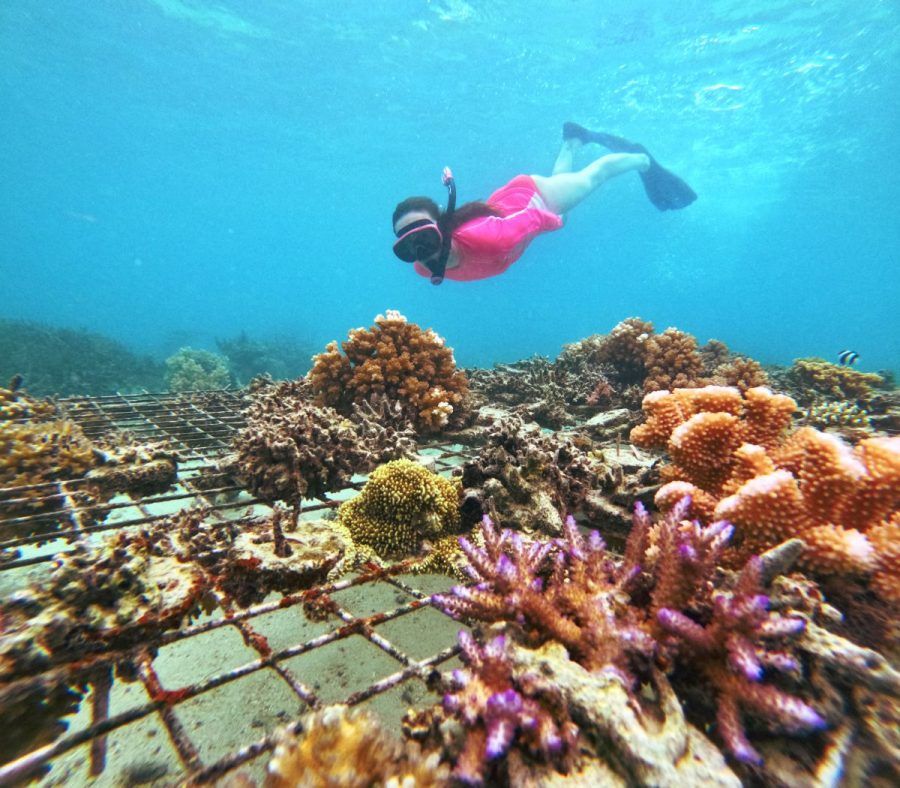
For examples, take a look at the 15 Best Eco Resorts in Fiji and the 10 Fiji Resorts with Conservation Programs.
Homestays
When it comes to supporting local communities, staying at homestays is a more ethical and environmentally friendly accommodation than a large resort. Homestays are run by locals typically using more sustainable methods of living due to the limited infrastructure in Fiji, especially in the outer islands, while the food provided is almost always locally sourced.
Learn more about where you can find guesthouses in the 15 Best Homestays in Fiji.
Backpacker Hostels/Resorts
Fiji is home to a few resorts and hostel-style accommodations, especially on Viti Levu, where dorm rooms are available. As these accommodations are able to host a larger number of people in a small space, hostels are typically much more sustainable than a resort by using much fewer resources per guest.
Learn more about hostel accommodation in the 20 Best Backpacker Hostels in Fiji.
 © FijiPocketGuide.com
How to Tell if an Accommodation is Sustainable
Unfortunately, there are quite a few hotels and resorts in Fiji that claim to be “green” and “environmentally friendly” yet only provide the bare minimum. We’ve seen quite a few resorts claim to be environmentally friendly when, in fact, all they do is have doorknob signs to tell housekeeping you don’t need your towels changed or plant-based toiletries that are still in tiny plastic bottles…
Sustainable and Environmentally Friendly Practices to Look for When Choosing Accommodation in the Cook Islands
If you want to make sure that an accommodation is more sustainable, look for a range of environmental and social initiatives that they do (not just one), such as:
- Housekeeping uses non-toxic cleaning agents and laundry detergents
- Uses renewable energy sources, like solar power – the more they rely on renewable energy than the grid, the better
- Provide bulk biodegradable soaps, shampoos and conditioners rather than individual bottles
- The construction of the accommodation has been made with more sustainably sourced or local materials
- Greywater recycling programs are in place, such as reusing water for landscaping, laundry, etc.
- Treated and filtered water is available for guests
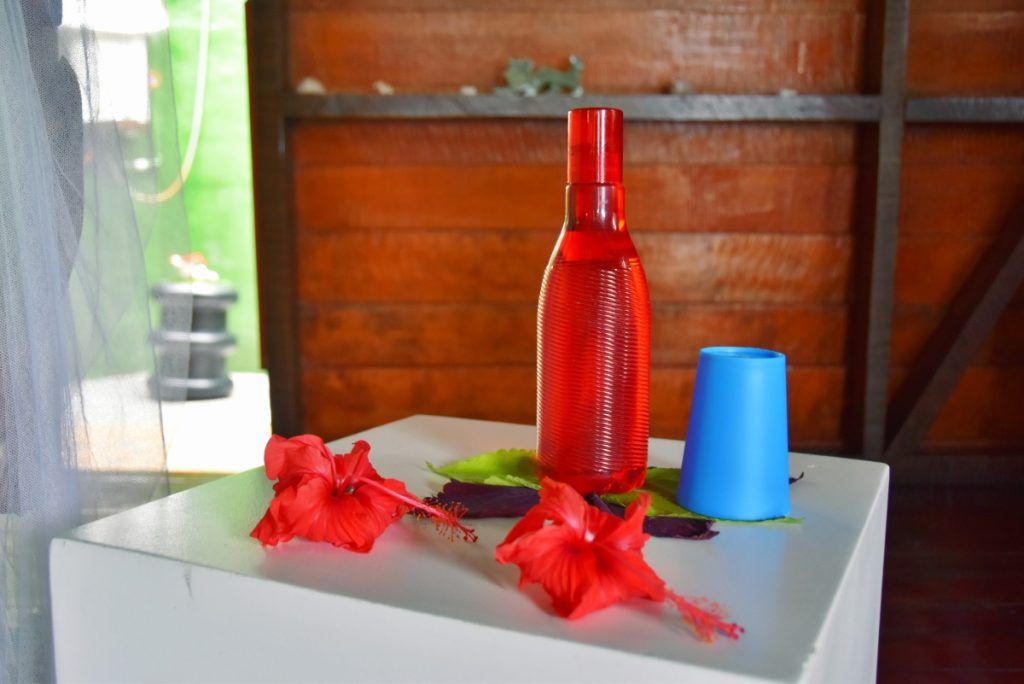
- Reusables (like drinking bottles, shopping bags, etc.) are provided for guests
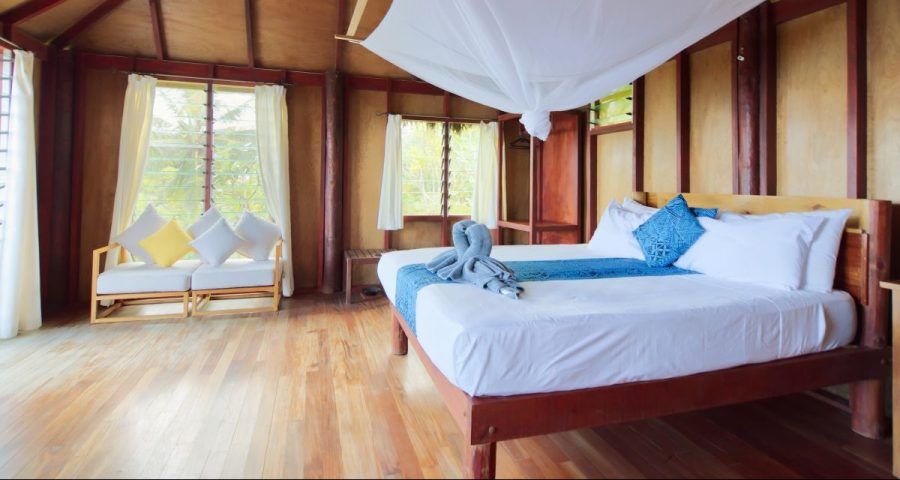
- They have airy room designs so there’s less need to use the air-conditioning
- Swimming pools are saltwater, freshwater or ocean water – no chlorine
- Night lighting is minimal to not disrupt views of the night sky
- There’s a recycling program that both guests and staff can use
- Offer vegan and vegetarian options in their restaurant and/or use locally sourced ingredients.
The accommodations that use a range of these initiatives can be found in the 15 Best Eco Resorts in Fiji.
Other Facilities to Consider
Once you’ve ticked off the sustainable factors the accommodation provides, you’ll also want to make sure the accommodation offers the appropriate facilities that you are looking for to complete your holiday. For instance, self-catering facilities, use of kayaks or paddleboards, snorkelling gear, a swimming pool or babysitting services might be important factors to you.
Check out How to Pick the Best Resort in Fiji for more advice on the subject.
 © FijiPocketGuide.com
Location, How to Get There and What is Nearby?
While eco-stays can be found across the island groups of Fiji, most are located in Kadavu, Taveuni and Vanua Levu, and a sporadic few are also in Viti Levu on the Coral Coast, inland from Suva and just off the Pacific Harbour.
Discover which island destinations appeal to you more by checking out the following guides:
- The Complete Guide to Kadavu
- The Complete Guide to Taveuni
- The Complete Guide to Vanua Levu
- The Complete Guide to the Coral Coast
- The Complete Guide to Suva
- The Complete Guide to Pacific Harbour & Beqa.
Of course, a downside to travelling to the outer islands of Fiji is the extra carbon required to get there. But by contributing to the local economy of these islands that rarely get tourists and staying for a while (i.e. none of those overnight or day tours to the outer islands, thank you!), the journey is at least more justified.
As almost all of Fiji’s eco-stays are in remote areas, you won’t need to worry so much about nearby shops, services and attractions. Instead, you need to consider what the resort itself provides in terms of food and entertainment, as you’re unlikely to be able to access it elsewhere. Resorts offer their own activities, from complimentary watersports to village visits, while food may be in the form of an a la carte menu or a set meal plan. Choose what suits you.
 © FijiPocketGuide.com
What’s Included in Your Stay?
We all have different needs which require different amenities. Families may need accommodation with portacots available, while backpackers may be seeking tent sites. You might want to have access to electricity 24/7, while some resorts switch off the power after a certain hour, for instance. Check out How to Choose the Best Resort in for You Fiji for an idea of typical amenities to compare, as well as How to Choose the Best Homestay in Fiji + 5 Essential Tips as homestays provide a very different experience.
When looking at eco-stays, you will also want to compare the type of eco-policy each resort has, as some environmentally-conscious travellers may think that simply using renewable energy is not enough when there are other resorts using composting toilets, promoting recycling, using sustainable local produce and more.
We’ve also touched on the activities available at the resort, but you still should compare the experiences and their associated prices so you can stick to your budget while having the holiday you envisioned.
Finally, some eco-friendly resorts have compulsory meal plans with set menus, while others have restaurants with more choices. It’s important to note, however, that resorts and homestays with set meal plans tend to produce less food waste.

![5 Best Glamping Accommodations in Fiji [2025]](https://fijipocketguide.com/wp-content/uploads/2024/03/Blue-Water-Retreat-Glamping-Accommodation-MUST-CREDIT-tongapocketguide.com--900x601.jpg)
![15 Best Eco-Resorts in Fiji ???? [2025]](https://fijipocketguide.com/wp-content/uploads/2024/03/Viani-Bay-Resort-Header-Pano-CREDIT-Fiji-Pocket-Guide--900x365.jpg)